Language
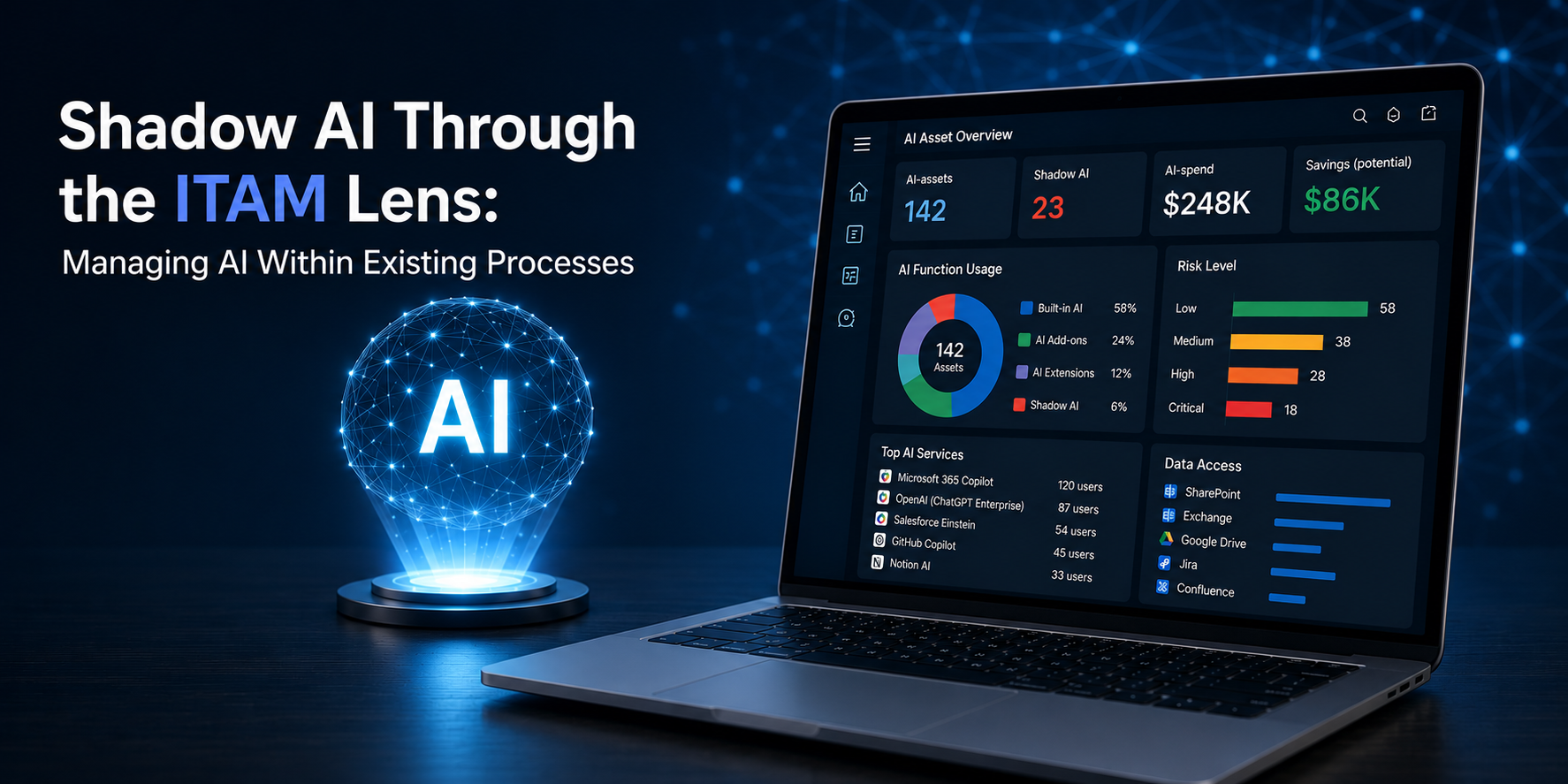
AI in the context of ITAM/SAM is not a new discipline. It is an additional layer of control on top of existing software, SaaS, and cloud services. The goal is not to build "AI Asset Management" from scratch — it is to extend the existing software asset lifecycle to cover AI functionality that is already spreading across the corporate IT landscape.
The corporate IT landscape is shifting quietly but quickly: familiar tools are gaining AI features, employees are connecting external services without approval, and AI spend is fragmenting across dozens of subscriptions. ITAM/SAM now needs to cover:
Previously, ITAM captured a standard asset entry:
Now an AI context layer is added to the same record:
The point is not simply to "see AI" — it is to bring AI into an already governed software asset lifecycle.
In practice, AI is already present inside tools that have been in the infrastructure for years:
A typical scenario: a company purchased 500 Copilot licenses. Only 120 are actively used. Some users have never opened Copilot. Some departments are simultaneously using ChatGPT Enterprise. The result — duplicated AI spend and blind spots in security.
ITAM/SAM does here what it has always done: identifies owners, analyzes usage, maps costs to actual consumption, classifies risks, and surfaces optimization opportunities.
Data access control is a separate dimension. ITAM/SAM needs visibility into which resources each AI tool can reach: SharePoint, Jira, Confluence, corporate email, CRM, ERP, and external models.
Shadow AI in action: an employee connects an AI assistant to corporate Google Drive without IT or security approval. Data flows to an external model — and no one knows.
Beyond familiar installed applications and SaaS authorizations, ITAM now tracks:
To manage AI properly within a CMDB or ITAM platform, new custom attributes are required:
Most of these sources already exist in the infrastructure — they simply need to be leveraged in the right context:
AI is gradually becoming another area of control within ITAM/SAM — alongside software, SaaS, cloud services, and spend management. For organizations, this means moving from point-in-time control of individual AI tools toward comprehensive AI governance within the existing IT landscape. ITAM/SAM is now one of the key leverage points for building a transparent, governed, and cost-effective approach to AI use across the enterprise.
At Synta we provide our customers with the solutions and top expertise to manage the growing complexity of AI transformation. Come check other articles in our blog.