Language
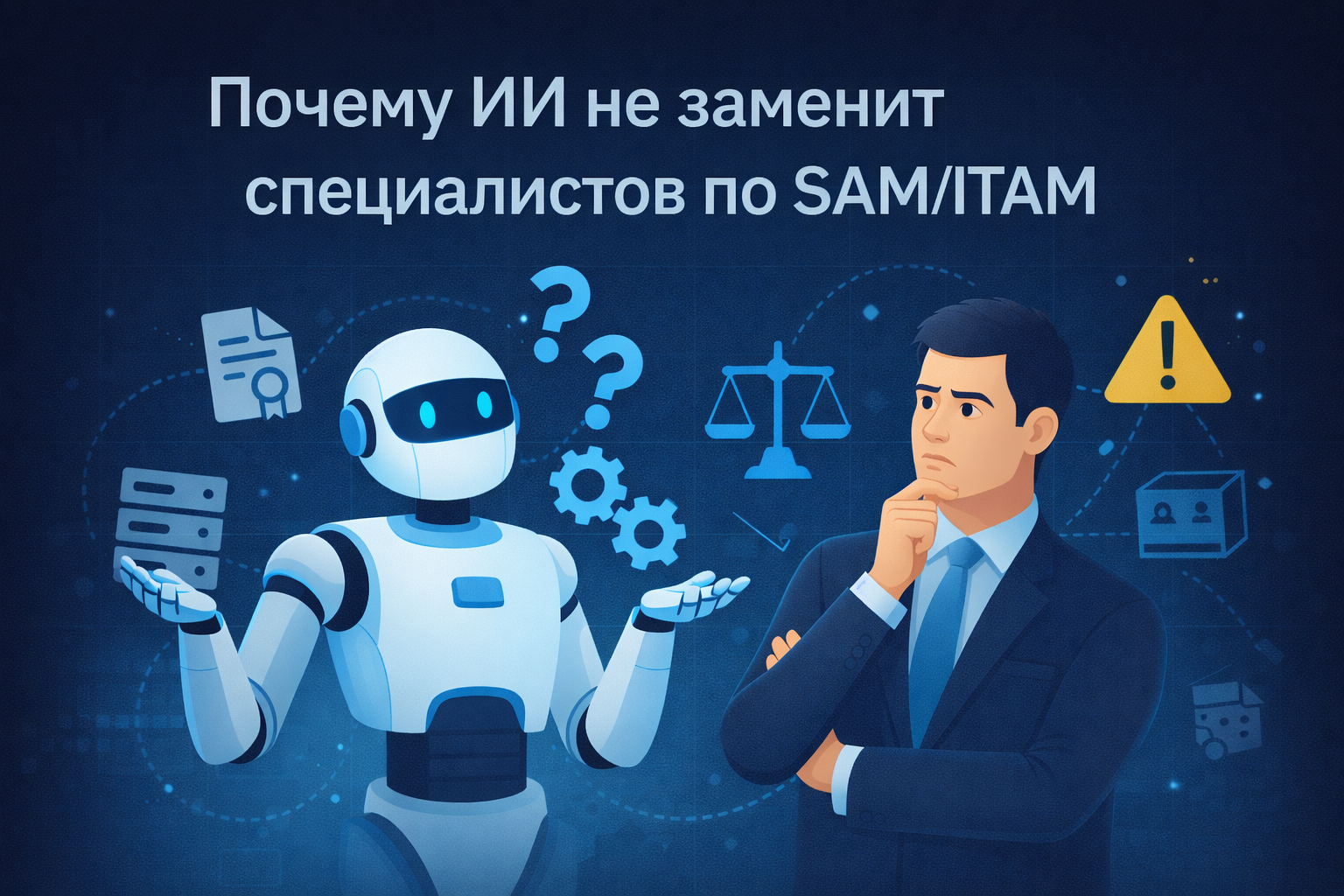
In 2025–2026, the topic of artificial intelligence has definitively moved beyond purely technological discussions. Companies are widely announcing the implementation of AI in operational processes, analytics, and IT management. Against this backdrop, an increasingly concerning thesis is emerging: if algorithms can analyze data, build forecasts, and detect anomalies, are asset and license management specialists still needed at all?
This is precisely where a dangerous myth has arisen. On forums, in the media, and even within corporate strategies, the idea is increasingly appearing that AI can completely replace the functions of ITAM and SAM specialists. This perception is already leading to team reductions and attempts to “automate everything.” The problem is that such logic is based on a simplified understanding of the disciplines themselves.
In many organizations, IT asset management is still perceived as technical support, reporting, or maintaining spreadsheets. When ITAM and SAM are reduced to inventory and data exports, it indeed creates the impression that algorithms can perform these tasks faster and more cheaply. However, this perception ignores the real role of these functions in corporate governance.
ITAM is not just about tracking equipment or cloud resources. It is about controlling the asset lifecycle, ensuring IT environment transparency, managing costs, and mitigating risks. SAM, in turn, extends far beyond counting licenses. It is an area where finance, contracts, legal obligations, and architectural decisions intersect. Mistakes here are not measured by convenience, but by financial consequences, potential audit penalties, and inefficient budget spending.
AI is indeed changing the daily work of ITAM and SAM specialists. The most noticeable impact today is seen at the level of specialized asset and license management platforms, where intelligent mechanisms are used to improve data quality, accelerate analytics, and reduce operational workload.
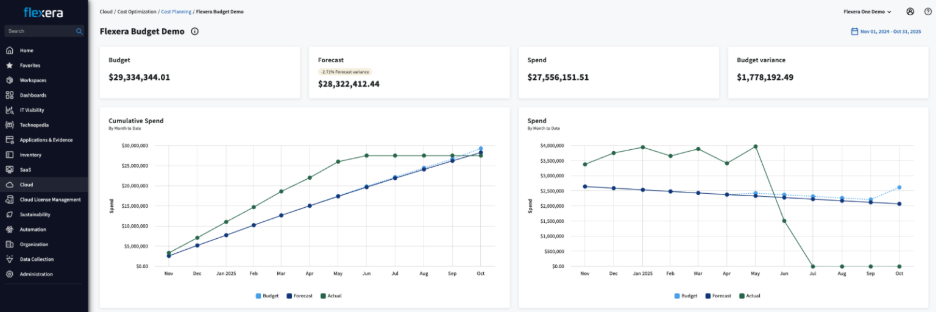
Such approaches are already implemented in specialized solutions, including Flexera One.
Intelligent models generate consumption and expense forecasts, simplifying budgeting and financial planning.
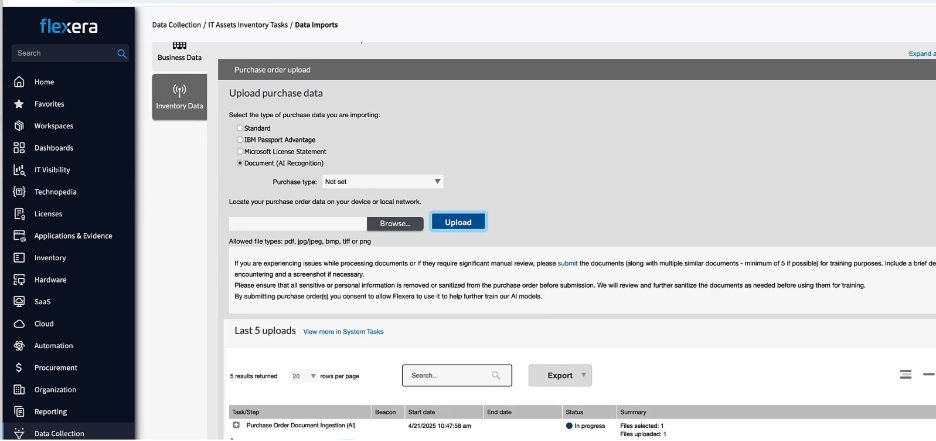
AI is used to structure and reconcile licensing data. This reduces the labor required to input and analyze contractual information.
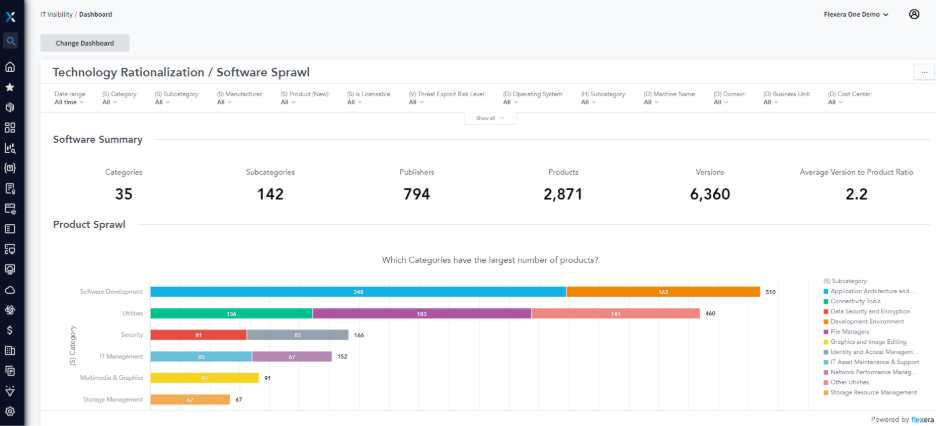
AI can be used to analyze discovery data exports, including software names, vendors, versions, installation attributes, and host information.
Algorithms help identify inconsistent records, hidden duplicates, and discrepancies between different inventory sources.
In specialized platforms such as Flexera One, this mechanism is implemented as intelligent data normalization.
More broadly, AI can be used for additional validation of exports, environment comparisons, or analysis of non-standard cases that fall outside the system’s automatic model.
Algorithms in Device42 simplify working with data and queries, reducing the complexity of interacting with the system model.

An intelligent assistant accelerates access to reference information and reduces the time required to find necessary details.
However, the use of AI in ITAM and SAM is not limited to the built-in capabilities of platforms.
AI can be used for virtual modeling of different licensing options before architectural decisions are made.
For example, in a Microsoft SQL Server environment, several scenarios can be compared: current placement of virtual machines across clusters, consolidation onto fewer hosts, or workload redistribution considering core licensing and the presence of Software Assurance (SA).
Algorithms analyze the number of physical cores, VM placement, editions (Standard/Enterprise), and SA conditions. As a result, the specialist receives an assessment:
This approach allows hypotheses to be tested without changing the production environment and enables evaluation of decision consequences in advance.
AI can be used not only for calculations but also for validating architectural and licensing hypotheses.
For example, algorithms help identify potential violations of licensing rules: edition mismatches with actual usage, component placement in infrastructure that does not meet vendor requirements, or situations where a more expensive edition is used without functional necessity.
AI can analyze:
This makes it possible to detect overpayment scenarios, over-licensing, or potential audit risks before the issue becomes a financial incident.
Collectively, such mechanisms change the nature of daily work. AI reduces the share of routine operations, allowing specialists to focus on data interpretation, risk management, and strategic decision-making.
At the same time, it is critically important to understand the limits of these capabilities. AI works effectively with data, patterns, and deviations, but it cannot independently form a managerial position. Algorithms do not consider contractual nuances, do not determine acceptable financial risk levels, do not negotiate with vendors, and do not make strategic decisions. They identify signals, but interpreting their significance for the business remains the responsibility of specialists.
Moreover, the quality of AI analytics directly depends on the underlying data. Algorithms cannot compensate for inconsistent inventory, accounting errors, or incomplete infrastructure information. AI analytics are effective only to the extent that the information base it relies on is reliable. This means that proper asset accounting and data quality remain fundamentally important regardless of the level of automation.
AI does not eliminate the need for expertise; it changes the nature of work. Automation and intelligent mechanisms remove a significant portion of mechanical operations, but the value of ITAM and SAM increasingly shifts toward analysis, interpretation, and decision-making. Managerial value is created not by algorithms, but by people who understand environment architecture, licensing models, contractual constraints, and the financial consequences of technical changes.
It is precisely at this point that an additional managerial risk arises. In some organizations, the implementation of AI and automation has already led to the reduction of certain roles and redistribution of responsibilities. Tasks previously performed by specialized professionals are being transferred to managers and adjacent departments, who must independently rely on conclusions generated by intelligent systems.
It is important to consider that modern neural networks are probabilistic models that may generate inaccurate or incorrect recommendations. Evaluating the correctness of such conclusions requires professional expertise, especially in areas related to licensing and financial obligations. Without domain expertise, the risk of errors increases, while responsibility for AI-generated conclusions remains unclear.
In these conditions, the key factor is not simply implementing technology, but the ability of teams to properly use AI as a tool for enhancing analytics and decision-making.
AI does not eliminate asset and license management. It radically increases the speed of information processing, but it does not remove the need for context, accountability, and professional data interpretation.
The future for Kazakh companies belongs to teams that understand the strategic nature of ITAM and SAM and use AI as a tool to strengthen their decisions. In this model, technology accelerates analysis and increases environmental transparency, while specialists shape policy, manage risks, and determine economically sound actions.